youtube facebook twitter linkedin
the book of earth. Powered by Blogger.

Pages

  • Home

The book of earth


"Rock lobster" redirects here. For the B-52's song, see Rock Lobster. For other uses, see Rock Lobster (disambiguation).
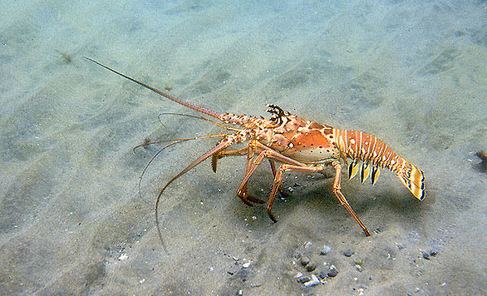
Spiny lobsters, also known as langouste or rock lobsters, are a family (Palinuridae) of about 60 species of achelate crustaceans, in the Decapoda Reptantia. Spiny lobsters are also, especially in Australia, New Zealand, South Africa, and the Bahamas, sometimes called crayfish, sea crayfish, or crawfish ("kreef" in South Africa), terms which elsewhere are reserved for freshwater crayfish.

Classification

The furry lobsters (e.g. Palinurellus) were previously separated into a family of their own, the Synaxidae, but are usually considered members of the Palinuridae. The slipper lobsters (Scyllaridae) are their next-closest relatives, and these two or three families make up the Achelata. Genera of spiny lobsters include Palinurus and a number of anagrams thereof: Panulirus, Linuparus, etc. (Palinurus was also a helmsman in Virgil's Æneid.) In total, 12 extant genera are recognised, containing around 60 living species:

Jasus Parker, 1883
Justitia Holthuis, 1946
Linuparus White, 1847
Nupalirus Kubo, 1955
Palibythus Davie, 1990
Palinurellus De Man, 1881
Palinurus Weber, 1795
Palinustus A. Milne-Edwards, 1880
Panulirus White, 1847
Projasus George and Grindley, 1964
Puerulus Ortmann, 1897
Sagmariasus Holthuis, 1991
Description


Jasus edwardsii
Although they superficially resemble true lobsters in terms of overall shape and having a hard carapace and exoskeleton, the two groups are not closely related. Spiny lobsters can be easily distinguished from true lobsters by their very long, thick, spiny antennae, by the lack of chelae (claws) on the first four pairs of walking legs, although the females of most species have a small claw on the fifth pair, and by a particularly specialized larval phase called phyllosoma. True lobsters have much smaller antennae and claws on the first three pairs of legs, with the first being particularly enlarged.

Spiny lobsters have typically a slightly compressed carapace, lacking any lateral ridges. Their antennae lack a scaphocerite, the flattened exopod of the antenna. This is fused to the epistome (a plate between the labrum and the basis of the antenna). The flagellum, at the top of the antenna, is stout, tapering, and very long. The ambulatory legs (pereopods) end in claws (chelae).

Fossil record

The fossil record of spiny lobsters has been extended by the discovery in 1995 of a 110-million-year-old fossil near El Espiñal in Chiapas, Mexico. Workers from the National Autonomous University of Mexico have named the fossil Palinurus palaecosi, and report that it is closest to members of the genus Palinurus currently living off the coasts of Africa.

Ecology


Fishing for Panulirus argus in Venezuela
Spiny lobsters are found in almost all warm seas, including the Caribbean and the Mediterranean Sea, but are particularly common in Australasia, where they are referred to commonly as crayfish or sea crayfish (Jasus edwardsii), and in South Africa (Jasus lalandii).

Spiny lobsters tend to live in crevices of rocks and coral reefs, only occasionally venturing out at night to seek snails, clams, sea-hares, crabs, or sea urchins to eat. Sometimes, they migrate in very large groups in long files of lobsters across the sea floor. These lines may be more than 50 lobsters long. Spiny lobsters navigate using the smell and taste of natural substances in the water that change in different parts of the ocean. It was recently discovered that spiny lobsters can also navigate by detecting the Earth's magnetic field. They keep together by contact, using their long antennae. Potential predators may be deterred from eating spiny lobsters by a loud screech made by the antennae of the spiny lobsters rubbing against a smooth part of the exoskeleton. Spiny lobsters usually exhibit the social habit of being together. However recent studies indicate that healthy lobsters move away from infected ones, leaving the diseased lobsters to fend for themselves.

Like true lobsters, spiny lobsters are edible and are an economically significant food source; they are the biggest food export of the Bahamas, for instance.

Many spiny lobsters produce rasping sounds to repel predators by rubbing the "plectrum" at the base of the spiny lobster's antennae against a "file". The noise is produced by frictional vibrations - sticking and slipping, similar to rubber materials sliding against hard surfaces. While a number of insects use frictional vibration mechanisms to generate sound, this particular acoustic mechanism is unique in the animal kingdom. Significantly, the system does not rely on the hardness of the exoskeleton, as many other arthropod sounds do, meaning that the spiny lobsters can continue to produce the deterrent noises even in the period following a moult when they are most vulnerable. The stridulating organ is present in all but three genera in the family (Jasus, Projasus, and the furry lobster Palinurellus), and its form can distinguish different species.


source - Wikipedia
if u like the post please like and shear


Four spiny lobsters off the Florida coast
Panulirus argus, the Caribbean spiny lobster, is a species of spiny lobster that lives on reefs and in mangrove swamps in the western Atlantic Ocean.

Anatomy

P. argus have long, cylindrical bodies covered with spines. Two large spines form forward-pointing "horns" above the eyestalks. They are generally olive greenish or brown, but can be tan to mahogany. There is a scattering of yellowish to cream-colored spots on the carapace and larger (usually four to six) yellow to cream-colored spots on the abdomen. They have no claws (pincers). The first pair of antennae are slender, black or dark brown and biramous. The second pair of antennae are longer than the body, and covered with forward pointing spines. The bases of the second antennae are thick, can have a bluish tinge, and are likewise covered with rows of spines. The legs are usually striped longitudinally with blue and yellow and terminate in a single spine-like point. The somites of the abdomen are smooth and have a shallow furrow across the middle. Each has pairs of swimmerets on the underside that are yellow and black. The lobes of the tail are colored similarly to the swimmerets.

P. argus may reach up to 60 cm (24 in) long, but typically around 20 cm (7.9 in), and is fished throughout its range. Sexual maturity in females is reached at a carapace length of 54–80 mm (2.1–3.1 in).

Biology

Like most decapods, P. argus hatches from eggs carried externally by the female for around four weeks. They begin life as a free-swimming, microscopic phyllosoma larvae. After about one year,the larvae settle in algae (Laurencia sp., Neogoniolithon sp.), in Thalassia testudinum seagrass beds or among mangrove roots. After undergoing several molts, they migrate to the coral reefs and live in holes or crevices. As they grow, they molt or shed their exoskeleton to make room for their larger bodies. As in other decapods, after molting, the new exoskleton or shell is soft, and has to harden. During this time, the lobster is highly vulnerable to predation and as a result they are usually very retiring until the new exoskleton hardens fully. The diet is mostly composed of mollusks, but they also consume detritus, vegetable material, and dead animals and fish they find on the bottom.

P. argus is a nocturnal species, taking to cover during the day. They serve as prey for skates, nurse sharks, octopuses, snappers and groupers. Although they generally prefer to remain near cover, at times groups of hundreds will line up and march across the floor off Florida and the Bahamas. The purpose of these migrations is not known, but they generally occur in the fall and may be in response to the onset of autumn storms.

Habitat

Individuals can be found at depths of up to 100 m (330 ft) from Rio de Janeiro, Brazil to Beaufort, North Carolina, including the Caribbean Sea, the Bahamas and Bermuda, with occasional reports from West Africa. Although they range throughout the entire Gulf of Mexico, in the northern portions of the Gulf they generally are only found at depths of 33 m (108 ft) and greater due to the seasonal variation in the water temperature. Around the southern portion of the Florida peninsula and throughout the Bahamas and Caribbean, they are found in shallower water. They generally prefer habitat with some sort of cover and can be found around coral reefs, artificial reefs, sponges, bridge pilings, wooden bridge bumpers, piers, and under the prop roots of mangroves.

Human consumption

P. argus is a popular seafood item for human consumption. It is the most important food export of the Bahamas, and rivals the shrimp industry in the Florida Keys in commercial value. They are eagerly sought by both commercial lobstermen and sport divers in South Florida, the Caribbean, the Bahamas, and Bermuda.

In Florida, there is a season where the spiny lobster may be taken, usually from the beginning of August to the end of March, to protect the species during its main breeding season. A special "mini season" a few days before the start of the regular lobster season gives recreational divers a "head start" in catching them. Divers catch them by gloved hand, often "tickling" them out of their dens with a dowel or small stick. In the Bahamas and Caribbean, they are often also speared or gigged (Florida game regulations prohibit taking them by these methods). In Bermuda, licensed individuals can only take lobsters by free-diving and using an approved noose within designated areas; all other methods and use of air tanks are prohibited. Commercial fisherman typically use lobster traps similar to those used by lobster fishermen in New England. The traps are usually baited with dead fish or chicken necks.

Lobsters can be cooked in many ways, a popular method in the Caribbean is to grill the lobster after splitting and seasoning.

Common names

Other common names for the species in the United States include spiny lobster, Bermuda spiny lobster, common spiny lobster, crawfish, Florida spiny lobster, West Indian langouste and West Indian spiny lobster.


source - Wikipedia
if u like the post please like and shear


Palinurus elephas is a spiny lobster, which is commonly caught in the Mediterranean Sea. Its common names include European spiny lobster, crayfish or cray (in Ireland), common spiny lobster, Mediterranean lobster and red lobster.

Distribution and habitat

Palinurus elephas is a common species of spiny lobster, found in the eastern Atlantic Ocean, from southern Norway to Morocco and the Azores, and in the Mediterranean Sea, except its eastern extremes. It lives on rocky exposed coasts below the intertidal zone, mainly at depths of 20 to 70 metres (66 to 230 ft).

Description

File:Common spiny lobster (Palinurus elephas) walking - Gijon Aquarium - 2015-07-02.webmPlay media
P. elephas may reach up to 60 cm (24 in) long, although rarely longer than 40 cm (16 in), and usually 25–30 centimetres or 10–12 inches. Few achieve their maximum weight of several kilograms.

The adults are reddish-brown with yellow spots. The carapace is slightly compressed and lacks lateral ridges. It is covered with forward pointing spines, with the supraorbital spines prominent. The antennae are very heavy and spiny. Their flagellum is tapering and is even longer than the body. The first walking leg (pereopod) is provided with subchela (the distal end of a limb developed as a prehensile structure). The fourth segment (merus) of this leg has a characteristic row of spines.

Reproduction

The breeding season is in September and October, with the female brooding the reddish eggs. These eggs hatch about six months later in the spring as flattened, leaf-shaped, planktonic larvae (phyllosoma larvae).

Diet

It is nocturnal and feeds on small worms, crabs or dead animals, hiding in rock crevices or caves during the day.

Uses

It is a much sought-after delicacy and is widely caught for food around the Mediterranean Sea, mostly with lobster pots, and is also caught less intensively off the Atlantic Coasts of Ireland, Portugal, France and England. There are also small fisheries for this species on the west coast of Scotland, employing tangle nets or lobster pots.


source - Wikipedia
if u like the post please like and shear


This article is about the biological species often called "scampi". For other uses, see Scampi (disambiguation).
Nephrops norvegicus, known variously as the Norway lobster, Dublin Bay prawn, langoustine (compare langostino) or scampi, is a slim, orange-pink lobster which grows up to 25 cm (10 in) long, and is "the most important commercial crustacean in Europe". It is now the only extant species in the genus Nephrops, after several other species were moved to the closely related genus Metanephrops. It lives in the north-eastern Atlantic Ocean, and parts of the Mediterranean Sea, but is absent from the Baltic Sea and Black Sea. Adults emerge from their burrows at night to feed on worms and fish.

Description

Nephrops norvegicus has the typical body shape of a lobster, albeit narrower than the large Homarus genus. It is pale orange in colour, and grows to a typical length of 18–20 centimetres (7–8 in), or exceptionally 25 cm (10 in) long, including the tail and claws. A carapace covers the animal's cephalothorax, while the abdomen is long and segmented, ending in a broad tail fan. The first three pairs of legs bear claws, of which the first are greatly elongated and bear ridges of spines. Of the two pairs of antennae, the second is the longer and thinner. There is a long, spinous rostrum, and the compound eyes are kidney-shaped, providing the name of the genus, from the Greek roots νεφρός (nephros, "kidney") and ops ("eye").

Distribution

Nephrops norvegicus is found in the north-eastern Atlantic Ocean and North Sea as far north as Iceland and northern Norway, and south to Portugal. It is not common in the Mediterranean Sea except in the Adriatic Sea, notably the north Adriatic. It is absent from both the Black Sea and the Baltic Sea. Due to its ecological demands for particular sediments, N. norvegicus has a very patchy distribution, and is divided into over 30 populations. These populations are separated by inhospitable terrain, and adults rarely travel distances greater than a few hundred metres.

Ecology


A Norway lobster in its burrow, at the Oceanographic Museum in Monaco
Nephrops norvegicus adults prefer to inhabit muddy seabed sediments, with more than 40 percent silt and clay. Their burrows are semi-permanent, and vary in structure and size. Typical burrows are 20 to 30 centimetres (8 to 12 in) deep, with a distance of 50 to 80 centimetres (20 to 31 in) between the front and back entrances. Norway lobsters spend most of their time either lying in their burrows or by the entrance, only leaving their shelters to forage or mate.

Nephrops norvegicus is a scavenger and predator that makes short foraging excursions, mainly during periods of subdued light. They feed on active prey, including worms and fish, which they capture with their chelipeds and walking legs, and food is conveyed to the mouth using the anterior walking legs, assisted by the maxillipeds.

Nephrops norvegicus is the host to a number of parasites and symbionts. A number of sessile organisms attach to the exoskeleton of N. norvegicus, including the barnacle Balanus crenatus and the foraminiferan Cyclogyra, but overall Nephrops suffers fewer infestations of such epibionts than other decapod crustaceans do. In December 1995, the commensal Symbion pandora was discovered attached to the mouthparts of Nephrops norvegicus, and was found to be the first member of a new phylum, Cycliophora, a finding described by Simon Conway Morris as "the zoological highlight of the decade". S. pandora has been found in many populations of N. norvegicus, both in the north Atlantic and in the Mediterranean Sea. Individuals may be found on most segments of the lobster's mouthparts, but are generally concentrated on the central parts of the larger mouthparts, from the mandible to the third maxilliped.

The most significant parasite of N. norvegicus is a dinoflagellate of the genus Hematodinium, which has caused epidemic infection in fished populations of N. norvegicus since the 1980s. Hematodinium is a genus that contains major pathogens of a wide variety of decapod crustaceans, although its internal taxonomy is poorly resolved. The species which attacks N. norvegicus causes a syndrome originally described as "post-moult syndrome", in which the carapace turns opaque and becomes highly pigmented, the haemolymph becomes milky white, and the animal appears moribund. Other parasites of N. norvegicus include the gregarine protozoan Porospora nephropis, the trematode Stichocotyle nephropis and the polychaete Histriobdella homari.

Life cycle


Adult female N. norvegicus with eggs
The typical life span of N. norvegicus is 5–10 years, reaching 15 years in exceptional cases. Its reproductive cycle varies depending on geographical position: "the periods of hatching and spawning, and the length of the incubation period, vary with latitude and the breeding cycle changes from annual to biennial as one moves from south to north". Incubation of eggs is temperature-dependent, and in colder climates, the duration of the incubation period increases. This means that, by the time hatching occurs, it may be too late for the females to take part in that year's breeding cycle. In warmer climates, the combined effects of recovery from moulting and ovary maturation mean that spawning can become delayed. This, in turn, has the effect of the female missing out a year of egg carrying.

Adult male Nephrops norvegicus moult once or twice a year (usually in late winter or spring) and adult females moult up to once a year (in late winter or spring, after hatching of the eggs). In annual breeding cycles, mating takes place in the spring or winter, when the females are in the soft, post-moult state. The ovaries mature throughout the spring and summer months, and egg-laying takes place in late summer or early autumn. After spawning, the berried (egg-carrying) females return to their burrows and remain there until the end of the incubation period. Hatching takes place in late winter or early spring. Soon after hatching, the females moult and mate again.

During the planktonic larval stage (typically 1 to 2 months in duration) the nephrops larvae exhibit a diel vertical migration behaviour as they are dispersed by the local currents. This complex biophysical interaction determines the fate of the larvae; the overlap between advective pathway destination and spatial distributions of suitable benthic habitats must be favourable in order for the larvae to settle and reach maturity.

Fisheries


Freshly caught Nephrops norvegicus in Scotland
The muscular tail of Nephrops norvegicus is frequently eaten, and its meat is known as scampi. N. norvegicus is eaten only on special occasions in Spain and Portugal, where it is less expensive than the common lobster, Homarus gammarus. N. norvegicus is an important species for fisheries, being caught mostly by trawling. Around 60,000 tonnes are caught annually, half of it in the United Kingdom's waters.

Besides the established trawling fleets, a significant number of fleets using lobster creels have developed. The better size and condition of lobsters caught by this method yield prices three to four times higher than animals netted by trawling. Creel fishing was found to have a reduced impact on the seafloor, require lower fuel consumption, and allow fishermen with smaller boats to participate in this high-value fishery. It has therefore been described as a reasonable alternative to demersal towed gears, and the allocation of additional fishing rights for this type of take has been suggested.

The North East Atlantic individual biological stocks of nephrops are identified as functional units. A number of functional units make up the sea areas over which a total allowable catch (TAC) is set annually by the EU Council of Ministers. For example, the TAC set for North Sea nephrops is based on the aggregate total tonnage of removals recommended by science for nine separate functional unit areas. This method has attracted criticism because it can promote the over-exploitation of a specific functional unit even though the overall TAC is under-fished. In 2016, the UK has implemented a package of emergency technical measures aimed at recovering the nephrop stock in the Farn(e) Deeps off North East England which is close to collapse.

Discards from Nephrops fishery may account for up to 37% of the energy requirements of certain marine scavengers, such as the hagfish Myxine glutinosa. Boats involved in Nephrops fishery also catch a number of fish species such as plaice and sole, and it is thought that without that revenue, Nephrops fishery would be economically unviable.

Taxonomic history

External identifiers for Nephrops norvegicus
Encyclopedia of Life 128512
ITIS 97317
NCBI 6829
WoRMS 107254
Also found in: Wikispecies, MarLIN & SeaLifeBase
Nephrops norvegicus was one of the species included by Carl Linnaeus in his 1758 10th edition of Systema Naturae, the starting point for zoological nomenclature. In that work, it was listed as Cancer Norvegicus, with a type locality of in Mari Norvegico ("in the Norwegian sea"). In choosing a lectotype, Lipke Holthuis restricted the type locality to the Kattegat at the Kullen Peninsula in southern Sweden (56°18′N 12°28′E / 56.300°N 12.467°E). Two synonyms of the species have been published – "Astacus rugosus", described by the eccentric zoologist Constantine Samuel Rafinesque in 1814 from material collected in the Mediterranean Sea, and "Nephropsis cornubiensis", described by Charles Spence Bate and Joshua Brooking Rowe in 1880.

As new genera were erected, the species was moved, reaching its current position in 1814, when William Elford Leach erected the genus Nephrops to hold this species alone. Seven fossil species have since been described in the genus.

Populations in the Mediterranean Sea are sometimes separated as "Nephrops norvegicus var. meridionalis Zariquiey, 1935", although this taxon is not universally considered valid.


source - Wikipedia
if u like the post please like and shear


Kiwa hirsuta is a crustacean discovered in 2005 in the South Pacific Ocean. This decapod, which is approximately 15 cm (5.9 in) long, is notable for the quantity of silky blond setae (resembling fur) covering its pereiopods (thoracic legs, including claws). Its discoverers dubbed it the "yeti lobster" or "yeti crab".

Identification

K. hirsuta was discovered in March 2005 by a group organized by Robert Vrijenhoek of the Monterey Bay Aquarium Research Institute in Monterey, California and Michel Segonzac of the Ifremer and a Census of Marine Life scientist using the submarine DSV Alvin, operating from RV Atlantis. The discovery was announced on 7 March 2006. It was found along the Pacific-Antarctic Ridge, 1,500 kilometres (930 mi) south of Easter Island at a depth of 2,200 metres (7,200 ft), living on hydrothermal vents. Based on both morphology and molecular data, the organism was deemed to form a new biological family (Kiwaidae); a second species, Kiwa puravida, was discovered in 2006 and described in 2011.


Characteristics

The animal has strongly reduced eyes that lack pigment, and is thought to be blind. The "hairy" pincers contain filamentous bacteria, which the creature may use to detoxify poisonous minerals from the water emitted by the hydrothermal vents where it lives. This process is known as chemosynthesis. Alternatively, it may feed on bacteria, although it is generally thought to be a carnivore.

Although it is often referred to as the "furry lobster" outside the scientific literature, Kiwa hirsuta is a squat lobster, more closely related to crabs and hermit crabs than true lobsters. The term "furry lobster" is more commonly used for the family Synaxidae.

Etymology

Macpherson et al. named the genus Kiwa after "the goddess of the shellfish in the Polynesian mythology", although Kiwa is a male guardian of the sea in Māori mythology. Hirsuta means "hairy" in Latin.


source - Wikipedia
if u like the post please like and shear


icon Crustaceans portal
Jasus is a genus of spiny lobsters which live in the oceans of the Southern Hemisphere. They have two distinct "horns" projecting from the front of the carapace, but lack the stridulating organs present in almost all other genera of spiny lobsters. Like all spiny lobsters, they lack claws, and have long stout antennae which are quite flexible.

Species

The following species are included in the genus Jasus:

Jasus caveorum Webber & Booth, 1995
Jasus edwardsii (Hutton, 1875) – Southern Australia: Western Australia to New South Wales & Tasmania. South Island of New Zealand
Jasus frontalis (H. Milne-Edwards, 1837) – Juan Fernández Islands, Islas Desventuradas
Jasus jlemingi Glaessner, 1960 – a Miocene fossil from New Zealand
Jasus lalandii (H. Milne-Edwards, 1837) – Southern Africa (Namibia to Algoa Bay, South Africa
Jasus paulensis (Heller, 1862) – St. Paul Island and Amsterdam Island
Jasus tristani Holthuis, 1963 – Tristan da Cunha archipelago; Vema seamount
Another species, formerly known as "Jasus verreauxi" is found around New Zealand (especially the North Island), the Chatham Islands, and around Australia (Queensland to Victoria and Tasmania); it is now placed in the genus Sagmariasus.


Approximate distributions of the extant species of Jasus, after Phillips (2006).
Orange: J. caveorum; pink: J. frontalis; red: J. tristani; yellow: J. lalandii; blue: J. paulensis; green: J. edwardsii
Fisheries

Most of the extant species are liable to commercial exploitation, with the majority of the A$4.6 million New South Wales lobster fishery industry being based on J. edwardsii and the closely related Sagmariasus verreauxi. Jasus lalandii is the most important commercial rock lobster in southern Africa.


source - Wikipedia
if u like the post please like and shear


Homarus gammarus, known as the European lobster or common lobster, is a species of clawed lobster from the eastern Atlantic Ocean, Mediterranean Sea and parts of the Black Sea. It is closely related to the American lobster, H. americanus. It may grow to a length of 60 cm (24 in) and a mass of 6 kilograms (13 lb), and bears a conspicuous pair of claws. In life, the lobsters are blue, only becoming "lobster red" on cooking. Mating occurs in the summer, producing eggs which are carried by the females for up to a year before hatching into planktonic larvae. Homarus gammarus is a highly esteemed food, and is widely caught using lobster pots, mostly around the British Isles.

Description

A blue-coloured lobster face-on: the claws are raised and open. The inside edges of the stocky right claw are covered in rounded protrusions, while the left claw is slightly slimmer and has sharp teeth.
On this European lobster, the right claw (on the left side of the image) is the crusher, and the left claw is the cutter.
Homarus gammarus is a large crustacean, with a body length up to 60 centimetres (24 in) and weighing up to 5–6 kilograms (11–13 lb), although the lobsters caught in lobster pots are usually 23–38 cm (9–15 in) long and weigh 0.7–2.2 kg (1.5–4.9 lb). Like other crustaceans, lobsters have a hard exoskeleton which they must shed in order to grow, in a process called ecdysis (moulting). This may occur several times a year for young lobsters, but decreases to once every 1–2 years for larger animals.

The first pair of pereiopods is armed with a large, asymmetrical pair of claws. The larger one is the "crusher", and has rounded nodules used for crushing prey; the other is the "cutter", which has sharp inner edges, and is used for holding or tearing the prey. Usually, the left claw is the crusher, and the right is the cutter.

The exoskeleton is generally blue above, with spots that coalesce, and yellow below. The red colour associated with lobsters only appears after cooking. This occurs because, in life, the red pigment astaxanthin is bound to a protein complex, but the complex is broken up by the heat of cooking, releasing the red pigment.

The closest relative of H. gammarus is the American lobster, Homarus americanus. The two species are very similar, and can be crossed artificially, although hybrids are unlikely to occur in the wild since their ranges do not overlap. The two species can be distinguished by a number of characteristics:

The rostrum of H. americanus bears one or more spines on the underside, which are lacking in H. gammarus.
The spines on the claws of H. americanus are red or red-tipped, while those of H. gammarus are white or white-tipped.
The underside of the claw of H. americanus is orange or red, while that of H. gammarus is creamy white or very pale red.
^ "European lobster: notes on the sizes of Homarus gammarus". British Marine Life Study Society. Retrieved October 14, 2010.
^ a b c d T. W. Beard; D. McGregor (2004). "Storage and care of live lobsters" (PDF). Laboratory Leaflet Number 66 (Revised). Lowestoft: Centre for Environment, Fisheries and Aquaculture Science.
^
^ "Orange lobster with two sharp claws is one in a million (or more)". National Marine Aquarium. Retrieved September 29, 2010.
^ P. J. Hayward; M. J. Isaac; P. Makings; J. Mayse; E. Naylor; G. Smaldon (1995). "Crustaceans (Phylum Crustacea)". In P. J. Hayward; John Stanley Ryland. Handbook of the marine fauna of north-west Europe. Oxford University Press. pp. 289–461. ISBN 978-0-19-854055-7.
^ Alan Davidson (2004). "Lobster (both European and American)". North Atlantic Seafood: A Comprehensive Guide with Recipes. Ten Speed Press. pp. 188–189. ISBN 978-1-58008-450-5.
^ P. Hansen; J. Aagaard (2008). "Freezing of Shellfish". In Rudolf Kreuzer. Freezing and Irradiation of Fish. Read Books. pp. 147–158. ISBN 978-1-4437-6734-7.
^ Marie Hauge (May 2010). "Unique lobster hybrid". Norwegian Institute of Marine Research. Retrieved September 30, 2010.
Life cycle

A grey-green translucent animal is seen from the side. The eye is large and shining, and is in a recess of the large carapace and its long rostrum. An abdomen, similar in length to the carapace, projects from the rear, and below the carapace, there is a mass of legs, some with small claws.
Zoea larva of Homarus gammarus
Female H. gammarus reach sexual maturity when they have grown to a carapace length of 80–85 millimetres (3.1–3.3 in), whereas males mature at a slightly smaller size. Mating typically occurs in summer between a recently moulted female, whose shell is therefore soft, and a hard-shelled male. The female carries the eggs for up to 12 months, depending on the temperature, attached to her pleopods. Females carrying eggs are said to be "berried" and can be found throughout the year.

The eggs hatch at night, and the larvae swim to the water surface where they drift with the ocean currents, preying on zooplankton. This stage involves three moults and lasts for 15–35 days. After the third moult, the juvenile takes on a form closer to the adult, and adopts a benthic lifestyle. The juveniles are rarely seen in the wild, and are poorly known, although they are known to be capable of digging extensive burrows. It is estimated that only 1 larva in every 20,000 survives to the benthic phase. When they reach a carapace length of 15 mm (0.59 in), the juveniles leave their burrows and start their adult lives.

Distribution

A calm body of water snakes away between steep slopes.
Tysfjorden, along with neighbouring fjords in Northern Norway, is home to the world's northernmost populations of H. gammarus.
Homarus gammarus is found across the north-eastern Atlantic Ocean from northern Norway to the Azores and Morocco, not including the Baltic Sea. It is also present in most of the Mediterranean Sea, only missing from the section east of Crete, and along only the north-west coast of the Black Sea. The northernmost populations are found in the Norwegian fjords Tysfjorden and Nordfolda, inside the Arctic Circle.

The species can be divided into four genetically distinct populations, one widespread population, and three which have diverged due to small effective population sizes, possibly due to adaptation to the local environment. The first of these is the population of lobsters from northern Norway, which have been referred to as the "midnight-sun lobster". The populations in the Mediterranean Sea are distinct from those in the Atlantic Ocean. The last distinct population is found in the Netherlands: samples from the Oosterschelde were distinct from those collected in the North Sea or English Channel.

Attempts have been made to introduce H. gammarus to New Zealand, alongside other European species such as the edible crab, Cancer pagurus. Between 1904 and 1914, one million lobster larvae were released from hatcheries in Dunedin, but the species did not become established there.

Ecology

Adult H. gammarus live on the continental shelf at depths of 0–150 metres (0–492 ft), although not normally deeper than 50 m (160 ft). They prefer hard substrates, such as rocks or hard mud, and live in holes or crevices, emerging at night to feed.

The diet of H. gammarus mostly consists of other benthic invertebrates. These include crabs, molluscs, sea urchins, starfish and polychaete worms.

The three clawed lobster species Homarus gammarus, H. americanus and Nephrops norvegicus are hosts to the three known species of the animal phylum Cycliophora; the species on H. gammarus has not been described.

Homarus gammarus is susceptible to the disease gaffkaemia, caused by the bacterium Aerococcus viridans. Although it is frequently found in American lobsters, the disease has only been seen in captive H. gammarus, where prior occupation of the tanks by H. americanus could not be ruled out.

Human consumption

Lobster pots stand on top of each other, in four rows of 6, 7, 8 and 9, respectively. Each has a wooden base and a metal hoop at either end and a crossbar, which collectively hold up a cover of netting.
Lobster pots on the harbour wall at Craster, Northumberland
Homarus gammarus is traditionally "highly esteemed" as a foodstuff and was mentioned in "The Crabfish" a seventeenth century English folk song. It may fetch very high prices and may be sold fresh, frozen, canned or powdered. Both the claws and the abdomen of H. gammarus contain "excellent" white meat, and most of the contents of the cephalothorax are edible. The exceptions are the gastric mill and the "sand vein" (gut). The price of H. gammarus is up to three times higher than that of H. americanus, and the European species is considered to have a better flavour.

Lobsters are mostly fished using lobster pots, although lines baited with octopus or cuttlefish sometimes succeed in tempting them out, to allow them to be caught in a net or by hand. In 2008, 4,386 t of H. gammarus were caught across Europe and North Africa, of which 3,462 t (79%) was caught in the British Isles (including the Channel Islands). The minimum landing size for H. gammarus is a carapace length of 87 mm (3.4 in).

Aquaculture systems for H. gammarus are under development, and production rates are still very low.

Taxonomic history

External identifiers for Homarus gammarus
Encyclopedia of Life 1039672
ITIS 97315
NCBI 6707
WoRMS 107253
Also found in: Wikispecies, ARKive, MarLIN
Homarus gammarus was first given a binomial name by Carl Linnaeus in the tenth edition of his Systema Naturae, published in 1758. That name was Cancer gammarus, since Linnaeus' concept of the genus Cancer at that time included all large crustaceans.

H. gammarus is the type species of the genus Homarus Weber, 1795, as determined by Direction 51 of the International Commission on Zoological Nomenclature. Prior to that direction, confusion arose because the species had been referred to by several different names, including Astacus marinus Fabricius, 1775 and Homarus vulgaris H. Milne-Edwards, 1837, and also because Friedrich Weber's description of the genus had been overlooked until rediscovered by Mary Rathbun, rendering any prior assignments of type species (for Homarus H. Milne-Edwards, 1837) invalid for Homarus Weber, 1795.

The type specimen of Homarus gammarus was a lectotype selected by Lipke Holthuis in 1974. It came from 57°53′N 11°32′E / 57.883°N 11.533°E, near Marstrand, Sweden (48 kilometres or 30 miles northwest of Gothenburg), but both it and the paralectotypes have since been lost.

The common name for H. gammarus preferred by the Food and Agriculture Organization is "European lobster", but the species is also widely known as the "common lobster".


source - Wikipedia
if u like the post please like and shear


Galathea strigosa is a species of squat lobster found in the northeast Atlantic Ocean, from the Nordkapp to the Canary Islands, and in the Mediterranean Sea and Red Sea. It is edible, but not fished for commercially. It is the largest squat lobster in the northeast Atlantic, reaching a length of 90 millimetres (3.5 in), or a carapace length of 53 mm (2.1 in), and is easily identified by the transverse blue stripes across the body.


source - Wikipedia
if u like the post please like and shear


The American lobster, Homarus americanus, is a species of lobster found on the Atlantic coast of North America, chiefly from Labrador to New Jersey. It is also known as Canadian lobster, true lobster, northern lobster, Canadian Reds, or Maine lobster. It can reach a body length of 64 cm (25 in), and a mass of over 20 kilograms (44 lb), making it not only the heaviest crustacean in the world, but also the heaviest of all living arthropod species. Its closest relative is the European lobster Homarus gammarus, which can be distinguished by its coloration and the lack of spines on the underside of the rostrum. American lobsters are usually bluish green to brown with red spines, but several color variations have been observed.

Distribution

Homarus americanus is distributed along the Atlantic coast of North America, from Labrador in the north to Cape Hatteras, North Carolina in the south. South of New Jersey, the species is uncommon, and landings in Delaware, Maryland, Virginia and North Carolina usually make up less than 0.1% of all landings. A fossil claw assigned to Homarus americanus was found at Nantucket, dating from the Pleistocene. In 2013, an American lobster was caught at the Farallon Islands off the coast of California.

Its also an invasive species in Sweden and its affecting the populations of native lobster species

Description


Profile of the anterior part of an American lobster
Homarus americanus commonly reaches 8–24 inches (200–610 mm) long and weighs 1–9 pounds (0.45–4.08 kg) in weight, but has been known to weigh as much as 44 lb (20 kg), making this the heaviest crustacean in the world. Together with Sagmariasus verreauxi, it is also the longest decapod crustacean in the world; an average adult is about 9 in (230 mm) long and weighs 1.5 to 2 lb (680 to 910 g). The longest American lobsters have a body (excluding claws) 64 cm (25 in) long. According to Guinness World Records, the heaviest crustacean ever recorded was an American lobster caught off Nova Scotia, Canada, weighing 44.4 lb (20.1 kg).

The closest relative of H. americanus is the European lobster, Homarus gammarus. The two species are very similar, and can be crossed artificially, although hybrids are unlikely to occur in the wild since their ranges do not overlap. The two species can be distinguished by several characteristics:

The rostrum of H. americanus bears one or more spines on the underside, which are lacking in H. gammarus.
The spines on the claws of H. americanus are red or red-tipped, while those of H. gammarus are white or white-tipped.
The underside of the claw of H. americanus is orange or red, while that of H. gammarus is creamy white or very pale red.
The antennae measure about 2 in (51 mm) long and split into Y-shaped structures with pointed tips. Each tip exhibits a dense zone of hair tufts staggered in a zigzag arrangement. These hairs are covered with multiple nerve cells that can detect odors. Larger, thicker hairs found along the edges control the flow of water, containing odor molecules, to the inner sensory hairs. The shorter antennules provide a further sense of smell. By having a pair of olfactory organs, a lobster can locate the direction a smell comes from, much the same way humans can hear the direction a sound comes from. In addition to sensing smells, the antennules can judge water speed to improve direction finding.

Lobsters have two urinary bladders, located on either side of the head. Lobsters use scents to communicate what and where they are, and those scents are in the urine. They project long plumes of urine 1–2 meters (3 ft 3 in–6 ft 7 in) in front of them, and do so when they detect a rival or a potential mate in the area.

The first pair of pereiopods (legs) is armed with a large, asymmetrical pair of claws. The larger one is the "crusher", and has rounded nodules used for crushing prey; the other is the "cutter", which has sharp inner edges, and is used for holding or tearing the prey.

The normal coloration of Homarus americanus is "dark bluish green to greenish brown", redder on the body and claws, and greener on the legs. This coloration is produced by mixing yellow, blue, and red pigments. Despite the rarity of strangely colored lobsters, many more of them are reported being caught. It is unclear as to whether this is an artifact of social media (i.e. it is easier to report catching a strangely colored lobster), or if it is due to a drop in predator populations.

Color variants

Blue

Yellow
An estimated one in 2 million lobsters are blue. A genetic mutation causes a blue lobster to produce an excessive amount of a particular protein. The protein and a red carotenoid molecule known as astaxanthin combine to form a blue complex known as crustacyanin, giving the lobster its blue color. In 2009 a blue lobster was caught in New Hampshire; in 2011, two blue lobsters were caught in Canada, one off of Prince Edward Island, and another in the Esgenoôpetitj First Nation territory in New Brunswick; another was caught in May 2012 off Nova Scotia. A blue lobster was caught off Pine Point in Scarborough, Maine in August 2014, and was donated to a local aquarium to join 3 other blue lobsters. Most recently, one was caught in Massachusetts off the coast of Cape Cod.

Yellow lobsters are the result of a rare genetic mutation and the odds of finding one are estimated to be 1 in 30 million. Reports of yellow lobsters include one off Whaleback Island (at the mouth of the Kennebec River), Maine, on August 1, 2006, off Prince Edward Island, Canada, on June 11, 2009, one discovered in Wainani Kai Seafoods in Kalihi, Hawaii in a shipment from Nova Scotia on April 30, 2010, in Narragansett Bay off Rhode Island on July 31, 2010, and one off the coast of Black Point in Niantic, Connecticut on June 9, 2014.

In July 2010, an albino lobster was reportedly caught in Gloucester. An estimated only one in 100 million lobsters is albino, entirely lacking in colored pigments.

On August 28, 2010, a calico lobster with a mottled orange and black shell was reported to have been caught in Maine. Only albino lobsters are rarer, and orange lobsters such as these are a 1 in 30 million catch.

Several lobsters have been caught with different colorings on their left and right halves. For instance, on July 13, 2006, a Maine fisherman caught a brown and orange lobster, and submitted it to the local oceanarium, which had only seen three lobsters of this kind in 35 years. The chance of finding one is estimated at 1 in 50 million. Many split-colored lobsters observed have been hermaphroditic chimeras, but not all.

Red lobsters are the usual result of a lobster being cooked. There is a 1 in 10 million chance of catching one alive with that color.

Life cycle


A female lobster carrying eggs on her pleopods. Note the tail flipper second from left which has been notched by researchers to indicate she is an active breeding female.
Mating only takes place shortly after the female has molted, and her exoskeleton is still soft. The female releases a pheromone which causes the males to become less aggressive and to begin courtship, which involves a courtship dance with claws closed. Eventually, the male inserts spermatophores (sperm packets) into the female's seminal receptacle using his first pleopods; the female may store the sperm for up to 15 months.

The female releases eggs through her oviducts, and they pass the seminal receptacle and are fertilized by the stored sperm. They are then attached to the female's pleopods (swimmerets) using an adhesive, where they are cared for until they are ready to hatch. The female cleans the eggs regularly, and fans them with water to keep them oxygenated. The large telolecithal eggs may resemble the segments of a raspberry, and a female carrying eggs is said to be "in berry". Since this period lasts 10–11 months, berried females can be found at any time of year. In the waters off New England, the eggs are typically laid in July or August, and hatch the following May or June. The developing embryo passes through several molts within the egg, before hatching as a metanauplius larva. When the eggs hatch, the female releases them by waving her tail in the water, setting batches of larvae free.

The metanauplius of H. americanus is 1⁄3 in (8.5 mm) long, transparent, with large eyes and a long spine projecting from its head. It quickly molts, and the next three stages are similar, but larger. These molts take 10–20 days, during which the planktonic larvae are vulnerable to predation; only 1 in 1,000 is thought to survive to the juvenile stage. To reach the fourth stage – the post-larva – the larva undergoes metamorphosis, and subsequently shows a much greater resemblance to the adult lobster, is around 1⁄2 in (13 mm) long, and swims with its pleopods.

After the next molt, the lobster sinks to the ocean floor, and adopts a benthic lifestyle. It molts more and more infrequently, from an initial rate of ten times per year to once every few years. After one year, it is around 1–1.5 in (25–38 mm) long, and after six years, it may weigh 1 pound (0.45 kg). By the time it reaches the minimum landing size, an individual may have molted 25–27 times, and thereafter each molt may signal a 40%–50% increase in weight, and a 14% increase in carapace length.

Ecology

The American lobster thrives in cold, shallow waters where there are many rocks and other places to hide from predators. It typically lives at a depth of 4–50 m (13–164 ft), but can be found up to 480 m (1,570 ft) below the surface.

The natural diet of H. americanus is relatively consistent across different habitats. It is dominated by mollusks (especially mussels), echinoderms and polychaetes, although a wide range of other prey items may be eaten, including other crustaceans, brittle stars and cnidarians. Lobsters in Maine have been shown to gain 35-55% of their calories from herring, which is used as bait for lobster traps. Only 6% of lobsters entering lobster traps to feed are caught.

Gaffkemia or red-tail is an extremely virulent infectious disease of lobsters caused by the bacterium Aerococcus viridans. It only requires a few bacterial cells to cause death of otherwise healthy lobsters. The "red tail" common name refers to a dark orange discoloration of the ventral abdomen of affected lobsters. This is, in fact, the hemolymph or blood seen through the thin ventral arthrodial membranes. The red discoloration comes from astaxanthin, a carotenoid pigment exported to the blood during times of stress. The same sign is also seen in other diseases of lobsters and appears to be a nonspecific stress response, possibly relating to the antioxidant and immunostimulatory properties of the astaxanthin molecule.

Epizootic shell disease is a bacterial infection which causes black lesions on the lobsters' dorsal carapaces, reducing their saleability and sometimes killing the lobsters.

Limp lobster disease caused by systemic infection by the bacterium Vibrio fluvialis (or similar species) causes lobsters become lethargic and die.

Paramoebiasis is an infectious disease of lobsters caused by infection with the sarcomastigophoran (amoeba) Neoparamoeba pemaquidensis. This organism also causes amebic gill disease in farmed Atlantic salmon, Salmo salar. Infection occurs throughout the tissues, causing granuloma-like lesions, especially within the ventral nerve cord, the interstices of the hepatopancreas and the antennal gland. Paramoebiasis is strongly suspected to play a prominent role in the rapid die-off of American lobsters in Long Island Sound that occurred in the summer of 1999.

Excretory calcinosis in American lobsters in Long Island Sound was described in 2002. The disease causes mineralized calculi to form in the antennal glands and gills. These cause a loss of surface area around the gills, and the lobster eventually asphyxiates. Several reasons have been proposed for the cause of a recent outbreak of the disease. The most generally attributed factor is an increased duration of warmer temperatures in the bottom of the Long Island Sound.

Taxonomy

The American lobster was first described by Thomas Say in 1817, with a type locality of "Long-branch, part of the coast of New Jersey". The name Say chose – "Astacus marinus" – was invalid as a junior homonym of Astacus marinus Fabricius, 1775, which is in turn a junior synonym of Homarus gammarus. The American lobster was given its current scientific name of Homarus americanus by Henri Milne-Edwards in his 1837 work Histoire naturelle des Crustacés ("Natural History of the Crustacea"). The common name preferred by the Food and Agriculture Organization is "American lobster", but the species is also known locally as the "northern lobster", "Maine lobster" or simply "lobster".

As food


Global capture production in tonnes by year

A cooked lobster
American lobsters are a popular food. They are commonly boiled or steamed. Hard-shells (lobsters that are several months past their last molt) can survive out of water for up to four or five days if kept refrigerated. Soft-shells (lobsters that have only recently molted) do not survive more than a few hours out of water. Lobsters are usually cooked alive, which may be illegal in certain areas and which some people consider inhumane.

One common way of serving lobster 'tail' (actually the abdomen) is with beef, known as surf and turf. Lobsters have a greenish or brownish organ called the tomalley, which, like the liver and pancreas in a human, filters out toxins from the body. Some diners consider it a delicacy, but others avoid it because they consider it a toxin source or dislike eating innards.

A set of nutcrackers and a long, thin tool for pulling meat from inaccessible areas are suggested as basics, although more experienced diners can eat the animal with their bare hands or a simple tool (a fork, knife or rock). Eating a lobster can get messy, and most restaurants offer a lobster bib. Meat is generally contained in the larger claws and tails, and stays warm quite a while after being served. There is some meat in the legs and in the arms that connect the large claws to the body. There is also some small amount of meat just below the carapace around the thorax and in the smaller legs.


Lobster traps on Long Island Sound near Guilford, Connecticut
See also: Lobster fishing
Most lobsters come from the northeastern coast of North America, with the Atlantic Provinces of Canada and the U.S. state of Maine being the largest producers. They are caught primarily using lobster traps, although lobsters are also harvested as bycatch by bottom trawlers, fishermen using gillnets, and by scuba divers in some areas. Maine completely prohibits scuba divers from catching lobsters (violations could result in up to a $1000 fine). Maine also strictly prohibits the landing of lobsters caught by bottom trawlers and other "mobile gear". Massachusetts offers scuba divers lobster licenses for a fee, and they are only available to state residents. Rhode Island also requires divers to acquire a permit.

Lobster traps are rectangular cages made of vinyl-coated galvanized steel mesh or wood, with woven mesh entrances. These are baited and lowered to the sea floor. They allow a lobster to enter, but make it difficult for the larger specimens to turn around and exit. This allows the creatures to be captured alive. The traps, sometimes referred to as "pots", have a buoy floating on the surface, and lobstermen check their traps between one and seven days after setting them. The inefficiency of the trapping system has inadvertently prevented the lobster population from being overfished. Lobsters can easily escape the trap, and will defend the trap against other lobsters because it is a source of food. An estimated 10% of lobsters that encounter a trap enter, and of those that enter 6% will be caught.

In the United States, the lobster industry is regulated. Every lobster fisher is required to use a lobster gauge to measure the distance from the lobster's eye socket to the end of its carapace: if the lobster is less than 3.25 inches (83 mm) long, it is too young to be sold and must be released back to the sea. There is also a legal maximum size of 5 in (130 mm) in Maine, meant to ensure the survival of a healthy breeding stock of adult males, but in parts of some states, such as Massachusetts, there is none. Also, traps must contain an escape hole or "vent", which allows juvenile lobsters and bycatch species to escape. The law in Maine and other states dictates a second large escape hole or "ghost panel" must be installed. This hole is held shut through use of biodegradable clips made of ferrous metal. Should the trap become lost, the trap eventually opens, allowing the catch to escape.

To protect known breeding females, lobsters caught carrying eggs are to be notched on a tail flipper (second from the right, if the lobster is right-side up and the tail is fully extended). Following this, the female cannot be kept or sold, and is commonly referred to as a "punch-tail" or as "v-notched". This notch remains for two molts of the lobster exoskeleton, providing harvest protection and continued breeding availability for up to five years.


Fishing boats in Yarmouth, Nova Scotia
In the late 1990s and early 21st century, lobster fishing was the cause of troubles between Acadians and Mi'kmaq First Nations in the Canadian Maritimes. The Acadian economy (and identity) relied substantially on fisheries, especially lobster. In 1998, the Supreme Court of Canada ruled in favor of the First Nations and granted them unlimited rights to natural resources, based on an 18th-century treaty. The federal government tried to take licenses and quotas from the traditional fishermen, whose fishing quota had already dropped dramatically in the years before, and give them to the natives. Burnt Church, a reserve between Miramichi and the Acadian town of Neguac, was the hub of these troubles. The tension increased and decreased with each fishing season, reaching its climax in April 2003, when a riot broke in the port of Shippagan, where three native-owned fishing ships and a fish processing plant were burnt down. Since then, efforts have been made to bring Acadians and natives closer together, and the tension has slowly abated.

American lobster tends to have a stable stock in colder northern waters, but gradually decreases in abundance moving southward. To manage lobster populations, more regulations and restrictions, geared towards achieving sustainable populations, are implemented gradually southward.

Genetics

Currently there is no published genome for the American lobster, although a transcriptome was published in 2016.


source - Wikipedia
if u like the post please like and shear

Older Posts

Translate

About Me

My photo
Raj bhardwaj
View my complete profile

LET’S BE FRIENDS

Popular Posts

  • Mongolian toad

Labels

amphipod Ancient world ants Bears Beetles Birds Bovidae family butterflies camelidae family cat breeds cat family centipedes Cervidae family copepod crabs crayfish crops crustacean dog breeds dogs family ( canidae ) Elephantinae family flies flowers frogs fruits fungus and mushrooms gnathiidae grasses and herbage herbs and remedy indian states & union territories isopods krills lemore ( Lorisidae ) lobsters millipedes monkeys moths ( polyphyletic group ) Nature wonders and phenomenas pet birds pig family plankton plants platypus Rhinocerotidae family rodents scorpion shrimp spices spiders toads tourism places in India trees universe virus water fleas weasel family ( nevala ) woodlouse world geography world history

recent posts

Blog Archive

  • February (29)
  • March (30)
  • February (1142)
  • February (136)
  • January (125)
  • November (168)

Created with by BeautyTemplates | Distributed by blogger templates